How to park a cargo bike securely (when it won't fit the rack)
Par Tim de Booij le 17 août 2026
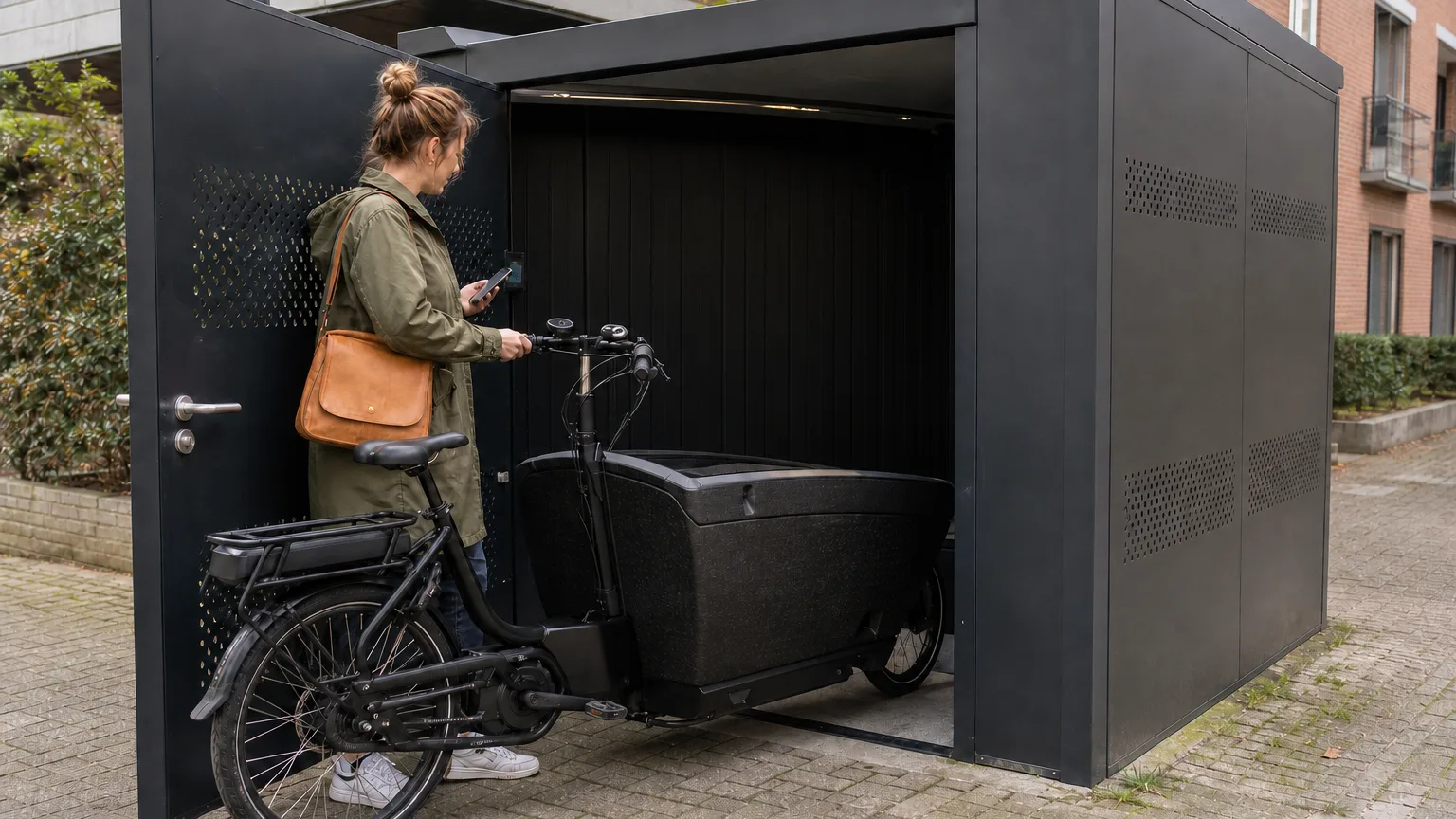
Ten years ago a bakfiets outside a school was a bit of a statement. Now it's just the school run. Groceries, two kids, the dog, the weekly shop, all of it goes on the cargo bike, and on plenty of streets in the Netherlands and Belgium there are more of them parked out front than cars.
Which leaves one problem nobody really solved on the way up: where do you put the thing when you're not riding it?
A normal bike you lean against a rack, click a lock, and walk off. A cargo bike is a meter and a half of frame, usually electric, and often worth more than the secondhand car it replaced. It doesn't fit the rack. It won't go through the back gate. And the street, in full view, is the worst possible spot for the most expensive bike you'll ever own.
So here's how people actually store a cargo bike, and where a secure spot comes in when storing it at home isn't an option.
Why a cargo bike is harder to park
It starts with size. A long-tail or a box bike takes up the space of two or three ordinary bikes, and it won't tuck into a standard rack or a single locker built around a regular frame. That's not a small inconvenience. It's the reason so many cargo bikes end up on the pavement by default, because there was nowhere obvious to put them.
Then there's what it's worth. A new electric cargo bike runs well into the thousands, which makes it a target rather than an afterthought. A cheap lock and a hopeful glance over your shoulder don't really match the value of what you're leaving behind.
And most of them are electric now, which adds a battery to the equation. A battery left out in the cold loses range, and a bike left out in the rain ages faster than one under a roof. So the ideal spot isn't just locked. It's covered, and ideally somewhere you can charge.
Storing it at home is best, if you can
If you have a shed, a garage, or even a bit of garden, that's the easy answer. Get it behind a door, bolt a ground anchor into the floor or wall, and loop a solid lock through the frame. A carport or an outdoor bike box does the covered part if indoor space is tight, and there are boxes sized for a cargo bike specifically.
The catch is that a lot of the people buying cargo bikes are exactly the people without any of that. Third-floor flat in Utrecht, no shed, no garage, a communal hallway the neighbours already complain about. For them "just keep it at home" isn't advice, it's the whole problem.
When home isn't an option: a shared, secure bike garage
This is the part that has quietly changed. If you can't store a cargo bike at home, the realistic alternative is a proper bike garage: a covered, locked, collective space you rent a spot in, rather than a rack out in the weather.
It's worth being clear about what fits where. A single locker is built around a normal bike, so a cargo bike usually won't go in one. What does work is the larger storage, the shared garages and collective spaces, and that's the other half of what a system like ours handles. ParkMyBike runs both single lockers and bigger bike garages, and whether it's indoors or out, in a locker or a larger storage solution, the same app opens the door.
In practice that means you find a spot near you, reserve it, and unlock it from your phone when you arrive. There's no key to lose and no office to visit. Payment is handled in the app, and you can rent a single time, take a personal subscription for daily use, or set it up through an employer. Where the location supports it, you can charge an e-bike or an electric cargo bike behind a locked door while it waits for you, instead of hauling the battery up three flights of stairs.
What to check before you park a cargo bike anywhere
A few things are worth a look before you commit to a spot.
Start with whether it physically fits, because not every space is built for a bike this size. Check the width and length of the bay or the garage, and if you're not sure, ask the operator before you turn up with a box bike and no room to put it.
If it's electric, look for charging, so the battery tops up in the dry rather than coming inside with you. Check who runs the location and what it costs, since a municipality or a local provider sets its own rates and conditions. And even behind a locked door, still lock the frame to something fixed. A shared garage keeps the casual thief out; a good lock handles the one who got in anyway.
The most valuable bike on the street shouldn't sit on the street
ParkMyBike turns secure, app-controlled bike lockers and garages into one parking system for cyclists, providers and manufacturers, and we're a proud partner of the Dutch Cycling Embassy.
Find a spot near you and rent it straight from the app at parkmybike.app, or get in touch if you run a location and want to offer secure, app-controlled storage that fits more than just standard bikes.
Autres articles de blog récents
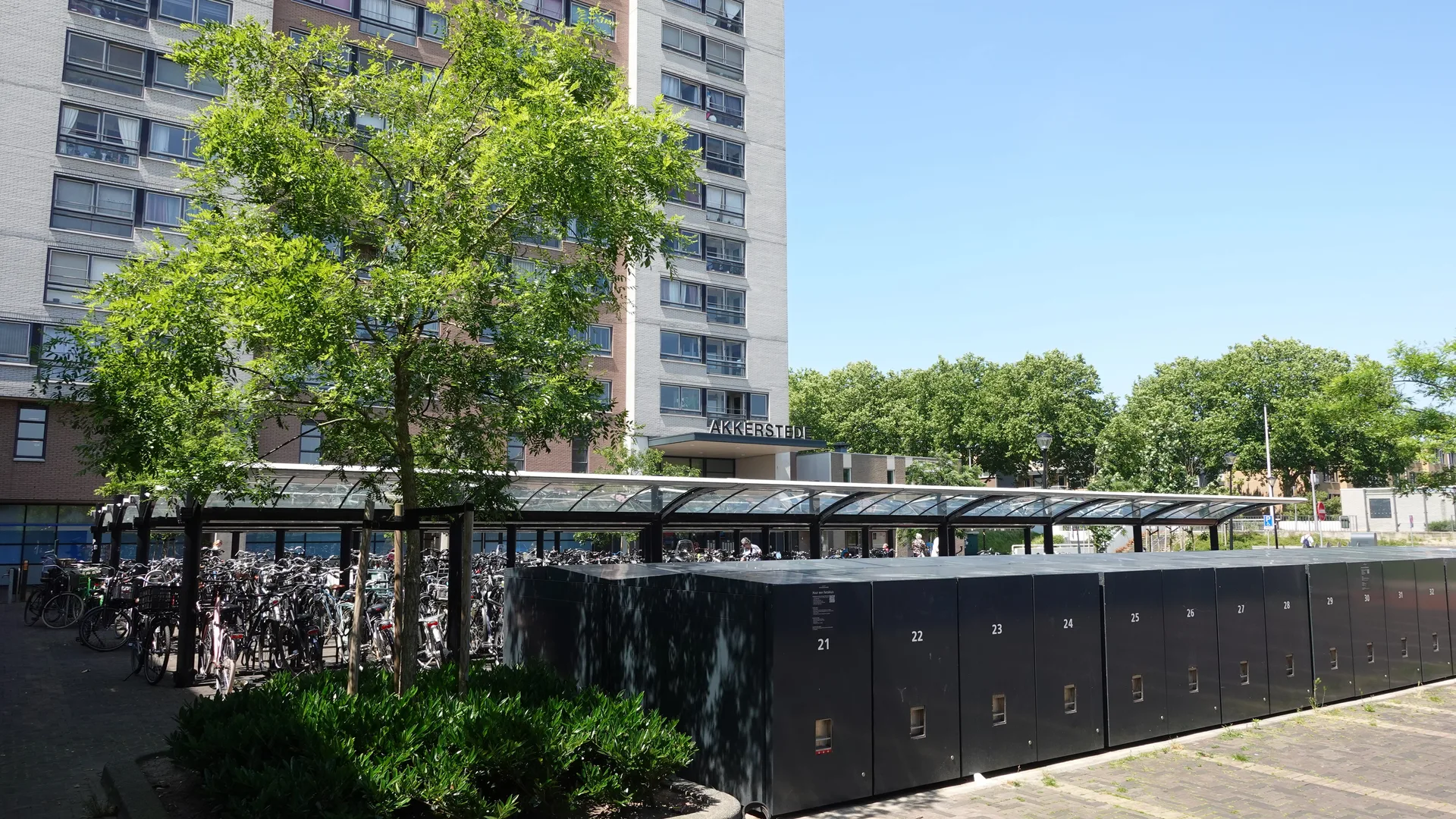
Secure bike parking at work (the part most offices still get wrong)
More people are cycling to work than ever, but the office bike rack hasn't kept up. Here's what secure bike parking at work actually needs, and how an employer can offer it without building anything.
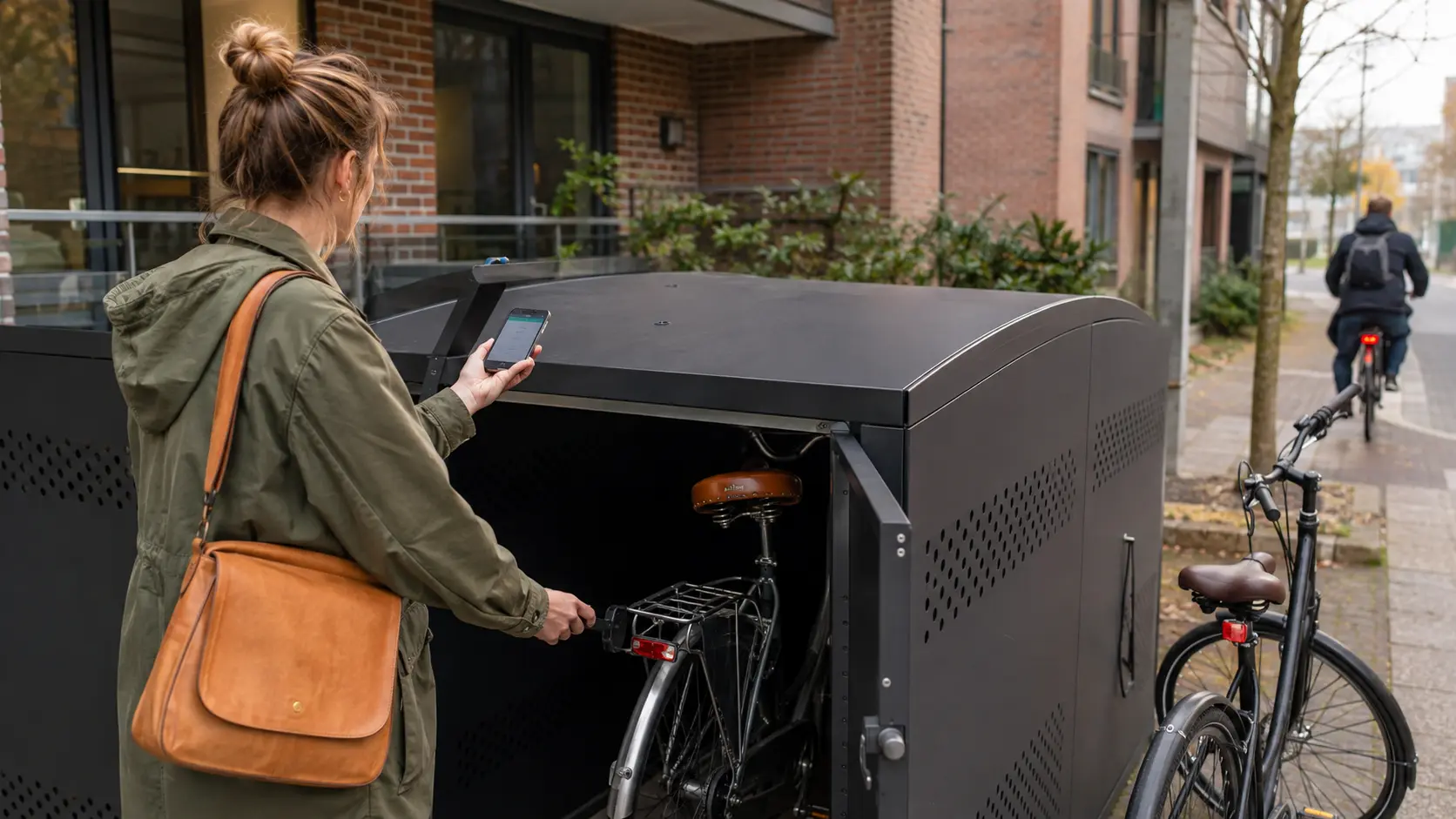
How to rent a bike locker (and what to check before you do)
Renting a secure bike locker is easier than it used to be, but a few details still decide whether it's worth it. Here's how the process works, what to look for, and where to find one.