Why mobility hubs need smart bike parking
By Julia Greijdanus on April 14, 2026
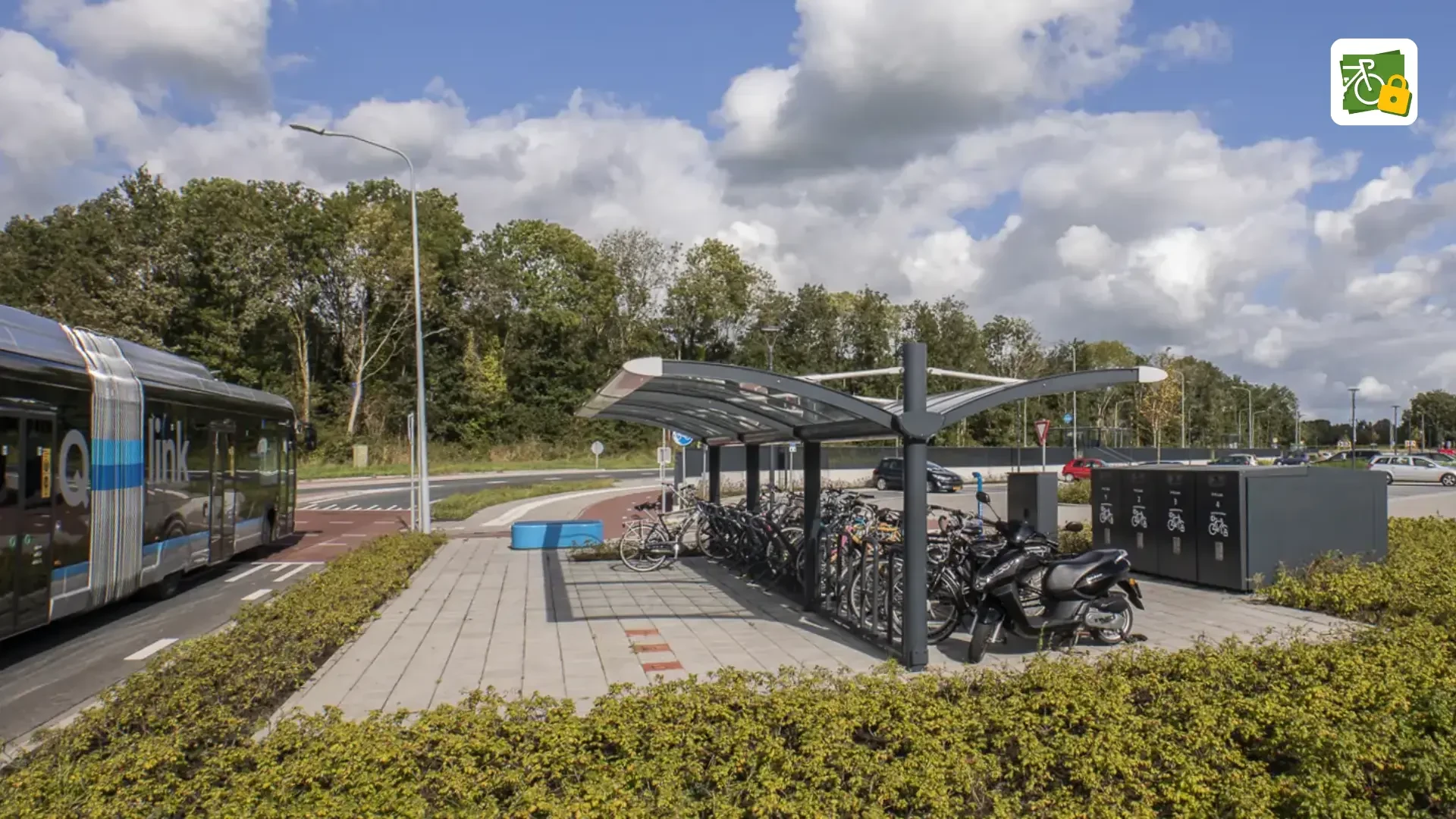
Mobility hubs are becoming key points in urban transport networks. They connect cycling, public transport, shared mobility, cars and sometimes more in one location. Especially in larger hubs and bike parking shelters, the scale and usage are increasing quickly.
As mobility hubs grow in scale and complexity, traditional bike parking starts to show its limits. This is where smart bike parking becomes not just useful, but necessary.
Bigger hubs bring bigger complexity
Conventional bike parking in hubs often relies on manual processes, physical keys, or fragmented access systems. While this may work in small installations, it becomes inefficient in larger shelters or high-traffic mobility hubs. More users means more access moments, more movement throughout the day, and more operational pressure.
Common challenges include:
- Users losing or sharing physical keys
- Limited visibility for operators on usage and occupancy
- Manual handling of access permissions or subscriptions
- Difficulties in scaling across multiple locations
- Lack of real-time insight into performance and demand
As usage increases, these limitations become more visible and costly to manage. That’s why many cities are now choosing to switch to smart bike parking.
What smart bike parking changes
Smart bike parking introduces a digital layer on top of physical infrastructure. It connects lockers, shelters, and access systems to software that manages everything from user access to operational control.
In practice, this means:
- Users can reserve and unlock parking spaces via an app
- Operators can manage all access remotely through a dashboard
- Access rights can be updated instantly without physical intervention
- Usage data becomes available in real time
- Maintenance and support become more efficient
In larger mobility hubs, this shift is significant. It reduces operational friction while improving the experience for both users and operators.
Especially relevant for larger shelters
The bigger the bike parking facility, the more important structure and control become. Large mobility hubs and multi-level shelters often combine different user groups, time-based access, and high turnover throughout the day.
In that context, consistency becomes difficult without a digital system supporting the physical infrastructure. Smart bike parking helps make large-scale operations manageable without increasing operational complexity.
Mobility hubs need integrated systems
Mobility hubs are no longer just parking locations. They are part of a wider transport network where different modes need to connect smoothly.
Bike parking plays a key role in that system, especially in cities that are pushing cycling as a primary transport mode. As these hubs grow, the infrastructure behind them needs to scale as well.
Smart bike parking is what connects physical infrastructure to that wider system.
ParkMyBike: The all-round solution for smart bicycle parking
This is exactly where ParkMyBike comes in. We add a digital access and management layer on top of existing bike parking infrastructure, making mobility hubs easier to operate, easier to scale, and ready for higher usage without added complexity.
Schedule a demo and see what ParkMyBike can do for you. You can find more information here.