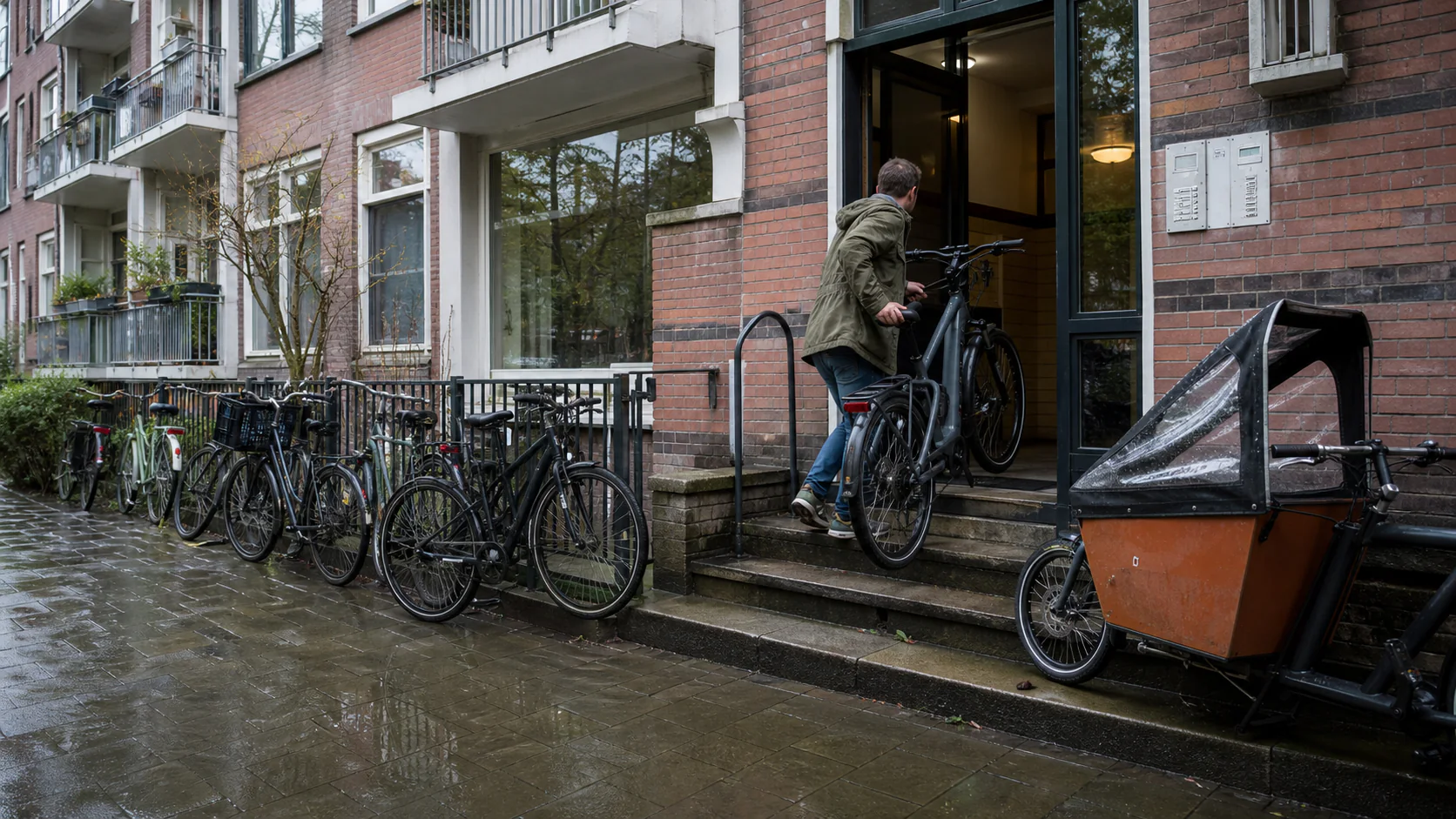
Storing an e-bike in winter (when there's no shed and no space indoors)
Por Tim de Booij el 7 de septiembre de 2026
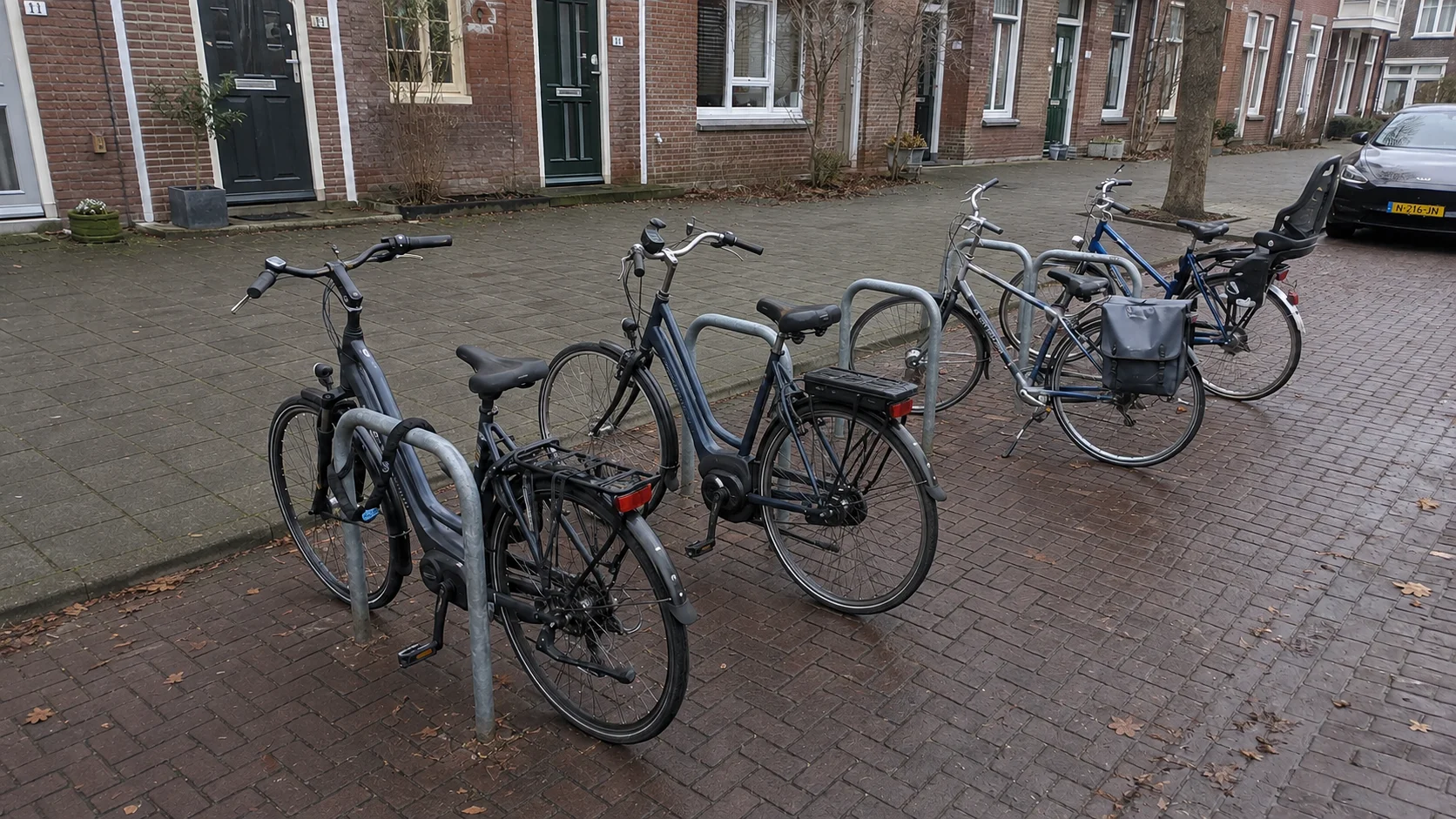
If you ride your e-bike less in winter, it can spend days outside between trips. Without a shed or room indoors, finding somewhere to leave it takes a bit of planning.
The spot against the fence may have worked well enough through summer. Once the bike stays there for longer, you start noticing how exposed it is to rain, and how awkward it would be to carry the whole thing up to your flat.
Most winter storage advice starts with the battery: bring it indoors and check how it should be stored. Useful advice, but it leaves you with a full-size bicycle to put somewhere. For riders in Dutch and Belgian cities, that can be the harder part.
Leaving a bike outside through winter
Rain and road salt are a poor combination for a bike that gets little attention between rides. If you keep riding through winter, follow the bike manufacturer's cleaning and maintenance advice rather than leaving the dirt until spring.
Theft is another reason to look at where you park. A bike left on the street still needs a good lock, even if you are only using it at weekends. A covered spot protects it from rain; an enclosed, lockable space also keeps it out of sight.
When you ride every day, you notice a flat tyre or a problem with the lock quickly. When you ride less often, it is easy to go weeks without checking. Make a point of looking in on the bike during a long break.
What to do with the battery
Cold weather can reduce your range. The amount varies with the battery, temperature and ride, so a single percentage is not much help when planning your own journey.
For storage, start with the instructions for your battery. As an example, Bosch's battery guide recommends a dry place between 0 and 20°C and a charge level of roughly 30 to 60% for extended storage. Those figures are guidance for the Bosch systems covered by that guide, not a rule for every e-bike.
If your battery is removable, storing it indoors can be practical even when the bike has to stay outside. Check the charging instructions too: a cold battery may need time to warm up before you plug it in.
Finding somewhere to charge at home
In a small flat, the socket by the front door can seem like the obvious choice. Before using it, look at where the battery and cable will sit and whether that space is part of your way out.
The Dutch fire service advises charging while you are home and awake, using the original charger and a sturdy, non-flammable surface. It also recommends a smoke alarm near the charging spot. Keep escape routes clear, including shared corridors and stairs.
It helps to choose a regular charging spot before the bike goes into winter storage. If you cannot find a suitable place at home, ask the parking provider what facilities and charging rules apply at a nearby location.
Choosing a winter parking spot
Start with the journey from your front door. A dry space is less useful if it is so far away that you avoid fetching the bike for short trips.
Check that the space is sheltered and can be locked, and ask who has access. Shared bike garages and individual lockers offer different arrangements. Measure your bike too, particularly if it has wide handlebars, a child seat or a cargo box. If you need charging, check for it separately.
You may already have a suitable shared space at home. If you do not, renting a bicycle parking spot nearby is worth considering. Check availability and the rental conditions before making plans for the whole winter.
Using ParkMyBike in winter
ParkMyBike helps cyclists find and rent bicycle parking spots. Providers use the platform to manage access and rentals for bike lockers and bike garages.
You can look for a location in the app and check the options there. The type of space matters: an individual locker and a shared bike garage will not have the same access arrangements or room for larger bikes.
An outdoor locker should not be assumed to be heated. It can shelter the bike while still getting cold inside, so you may need to take a removable battery home even when the bike is parked under cover.
If a location offers charging, check its instructions and your battery's permitted charging temperatures before using it. A socket behind a locked door does not by itself make unattended charging appropriate. Providers who want to connect existing lockers can contact us to discuss the hardware at their location.
Before the weather turns
Try the parking spot while you are still using the bike regularly. Check that you can get it in and out comfortably and that the walk home is one you are happy to make in the rain.
Then decide where the battery will stay and where you will charge it. Having both sorted makes it easier to keep using the bike when you want to.
Before booking, read the location details and ask the provider about anything that is unclear.
Look for a spot near you in the app, or get in touch if you manage a location and want to offer winter bicycle parking.